

Culinary Team Building: From Food Pairing to Company Culture
Food is probably the most versatile territory in team building. It isn’t one activity: it’s a whole category of ingredients that can be combined in almost endless ways – a cooking workshop is not the same as a tasting, a tasting is not the same as a grape harvest, and none of the three works the same way for a tech company as for a food business. This article doesn’t put forward “the best culinary activity”; instead, it maps out all the ingredients available, so each company can put together the combination that best reflects its culture.
Why food works as a cohesion mechanism
Sharing food is one of the oldest and most universal social rituals there is. From the perspective of group psychology1, eating together naturally lowers hierarchical barriers: at the table, everyone plays the same role. When you add an element of making something together – cooking, not just eating – a second mechanism kicks in: cooperation towards a tangible, shared result, which is exactly what any team building dynamic is aiming for.
This explains why culinary team building combines two sources of cohesion at once:
1. The process
Cooking, tasting or harvesting as a team creates coordination, spontaneous roles and small problems solved together.
2. The result
The final dish, menu or bottle is a shared achievement – and often, quite literally, something the group eats and enjoys together2.
Few team building categories offer this double layer so naturally.
Culinary formats as base “ingredients”
Rather than thinking in terms of “fixed activities”, it’s more useful to think of base formats that are then combined according to the objective, the size of the group and the company’s profile.
Collaborative cooking workshop
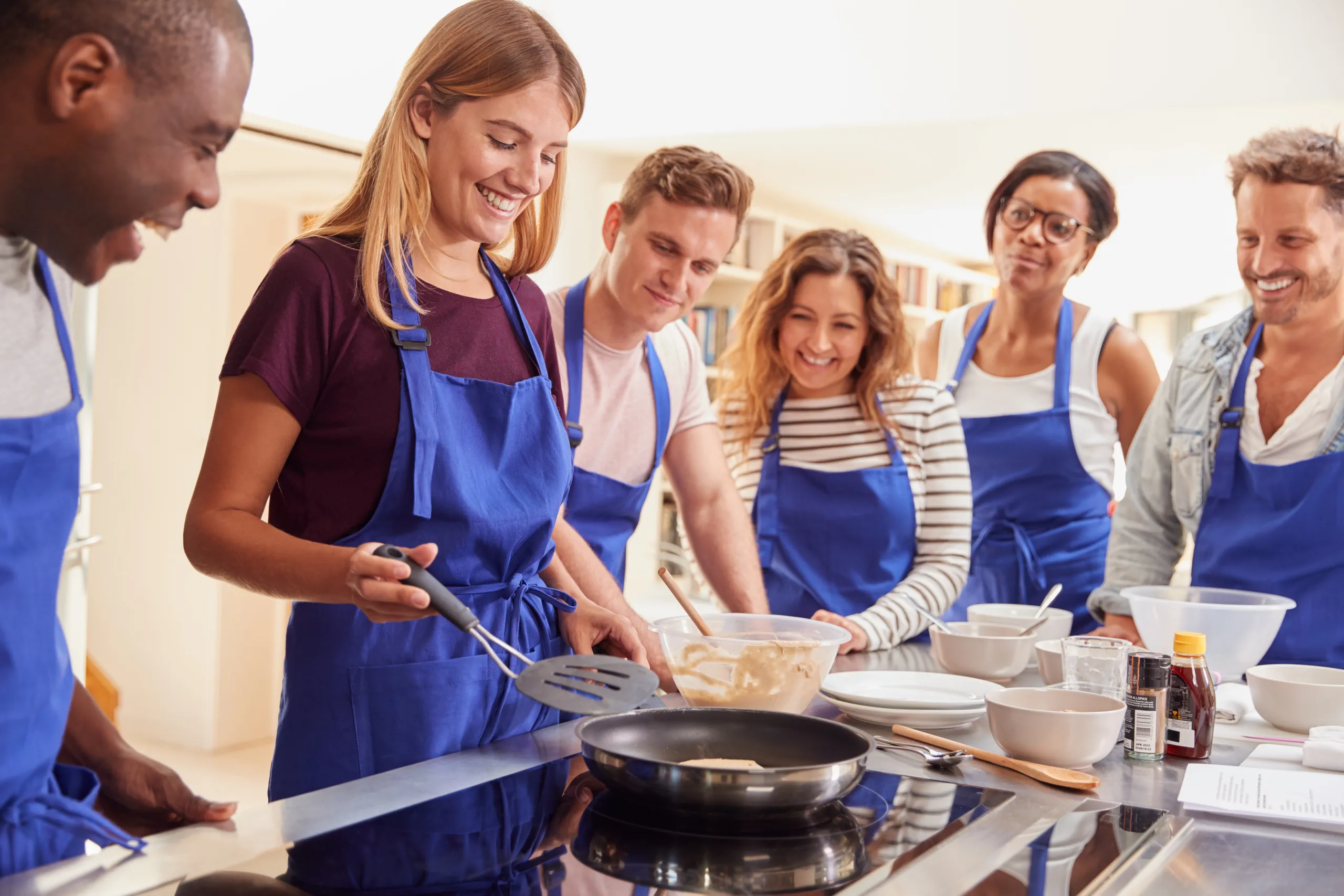
A format in which the team, split into small groups, prepares a recipe or a full menu under the guidance of a chef or facilitator. The main goal is cohesion through the process: communication, sharing out tasks, managing time.
- Common themed variations: Mediterranean cuisine, Asian cuisine, signature cuisine, baking and pastry.
MasterChef-style competition
The competitive version of the cooking workshop: teams compete against each other to make the best dish according to criteria set by a jury (which may include the chef, company managers, or cross-voting between teams). On top of cohesion, it adds a gamification element that works very well with teams who enjoy healthy competition.
Food tour (tapas tour)
A format that takes the experience out into the city: a route through different food venues, with tastings at each stop. It combines the culinary element with discovering the urban setting – especially powerful in cities with a distinctive food culture, such as Barcelona.
Food pairing and tasting
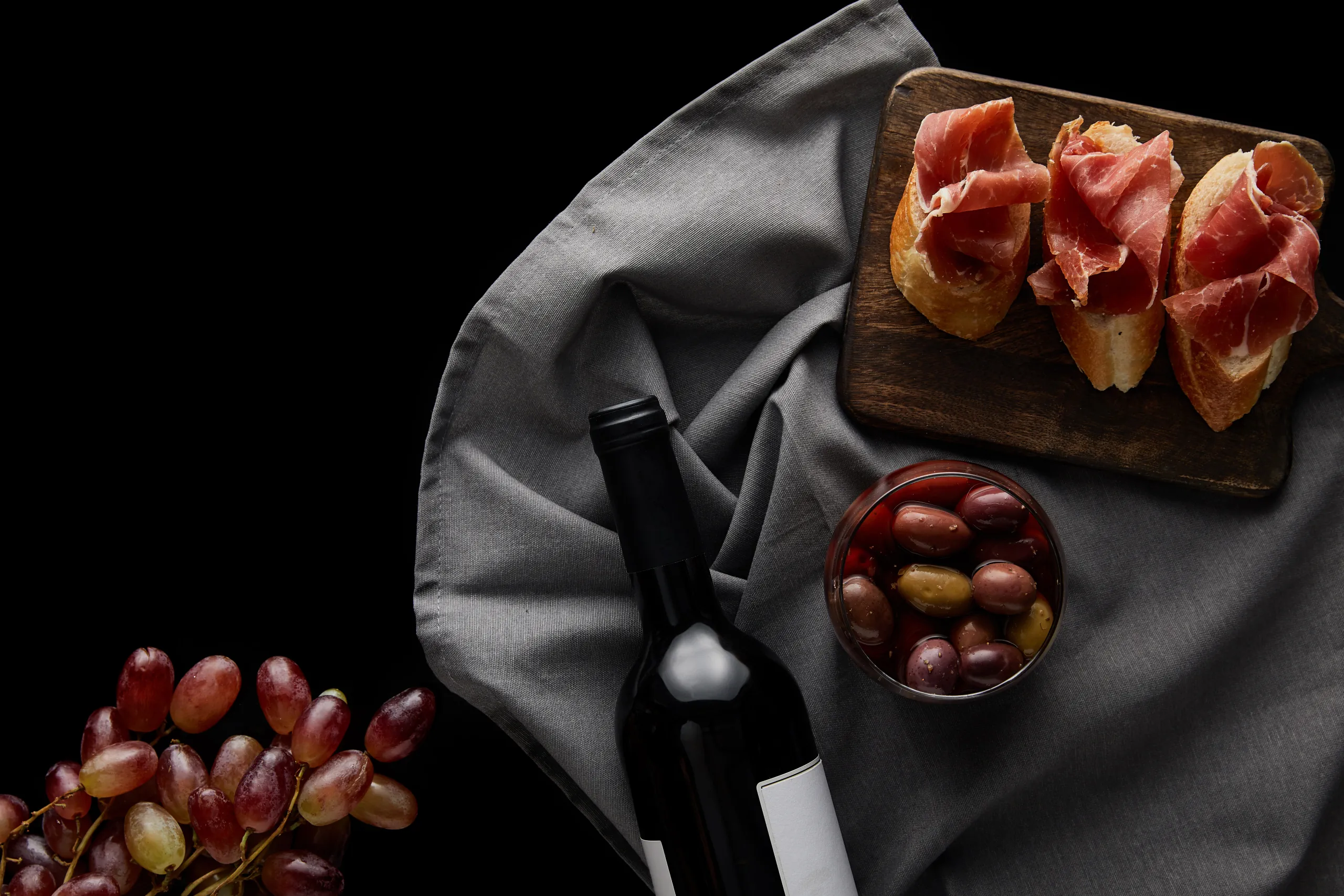
A format built around a guided tasting of products – wine, olive oil, cheese, chocolate – together with an expert explanation of how to pair them. Pairing brings in a sensory and learning element that sets it apart from purely “cooking” formats: here the team doesn’t make anything, but discovers and compares together, which sparks conversation and creates common ground through a shared experience.
Show cooking
A format in which a chef prepares a dish live in front of the team, usually with moments of interaction (tasting intermediate steps, questions, small contributions from the audience). It’s the option that asks the least “effort” of participants, but has high visual and sensory impact – suited to being one element within a wider event rather than a standalone activity.
From tasting to terroir: wine, wineries and the grape harvest
Food pairing is the natural gateway to a much wider culinary world: that of the land, wine and agricultural production. Once the team has experienced a guided tasting, the logical next step – and one in high demand in places like Barcelona, Penedès or Priorat – is to take the experience to where it all comes from.
Winery visits as an extension of culinary team building
A winery visit combines several elements in one: travel (a change of scenery, valuable in itself for switching off), an educational element (how wine is made), and the tasting as the natural finale. For teams who value a “full day away from the office”, it’s one of the options with the best balance between perceived experience and logistics required.
The grape harvest as a seasonal activity
Late August – October
typical grape harvest season, depending on area and variety
The grape harvest adds another layer: active participation in a real production process, on a fixed calendar (typically between late August and October, depending on the area and grape variety). This makes it a de facto agricultural CSR activity – the team doesn’t just visit and taste, it takes part in a process whose result it can later see (the vintage it helped with). It’s also an activity that ties in directly with the B2B calendar for planning year-end events, as it falls just a few months before the peak season for corporate events in December.
Tailoring by company sector
This is where the “ingredients” approach becomes really powerful: the same culinary world can be put together in completely different ways depending on which company is organising the activity.
Nutraceutical or nutritional supplement company
A company focused on functional nutrition – for example, one specialising in omega-3 fatty acids and DHA – can turn its culinary team building into a single-theme experience aligned with its own business: a workshop centred on oily fish (the natural source of omega-3), baking wholegrain bread with a high proportion of flaxseed and canary seed (plant sources of omega-3 and fibre), or a menu designed around ingredients rich in essential fatty acids. In this case, team building isn’t just a cohesion activity: it’s a piece of internal communication that reinforces the company’s identity and purpose through the experience.
Hospitality or food retail company
For a company whose business is already food, culinary team building can lean towards show cooking with its own products or comparative tastings of its range against market references – turning the activity into an opportunity for team training as well as cohesion.
Tech or consulting company
For more analytical profiles, the competitive format (MasterChef, team challenges with scoring criteria) tends to work particularly well, because it brings to the culinary arena a logic of objectives and results that these teams are already familiar with – gamification applied to a context completely different from work.
How to combine formats: Impalaya’s “ingredients” approach
Thinking of culinary team building as a fixed catalogue of activities is like only offering ready-made pizzas: there’s variety, but none of them is really “your pizza”. The alternative approach – and the one we use at Impalaya – is to work with ingredients: base formats (workshop, competition, tour, tasting, show cooking, winery visit, grape harvest) that are combined according to the objective, the size of the group, the season and the company’s profile.
This means the relevant questions aren’t “what culinary activities do you have?”, but rather:
- What objective are we after – pure cohesion, learning, alignment with our brand?
- What size is our group and how much time do we have?
- Does it make sense to connect the activity to the land (winery, grape harvest), or would we rather have an urban format (workshop, tour)?
- Is there something in our own business that we could reflect in the experience?
Based on the answers, we put the activity together – we don’t pick it from a list.

Culinary and corporate glossary
Tasting
A guided, comparative tasting of a product (wine, olive oil, cheese, chocolate), focused on identifying and describing its sensory characteristics.
Food pairing
Deliberately combining food and drink (typically dishes and wines) so that each brings out the best in the other.
Show cooking
Live cooking in front of an audience, with a demonstrative and interactive element.
Grape harvest
Picking grapes in the vineyard; a seasonal activity linked to the wine production cycle.
Agricultural CSR
The strand of corporate social responsibility linked to agricultural or local activities, where the team’s participation has an environmental element or supports local producers.
Themed customisation
Adapting a culinary activity to the sector, values or brand identity of the company organising it, going beyond choosing a generic format.
Looking for inspiration to tailor your next culinary team building to your company’s sector or values? Some leading brands in functional nutrition have already explored this kind of themed experience – if you’d like to see how this approach works in a real case, we can put you in touch with examples from the sector.