

When a company wants its team to do something with social impact, two terms tend to come up that are often used as synonyms but follow different logics: charitable team building and corporate volunteering. Understanding the difference isn’t a matter of semantics – it determines the format, the frequency, who takes part and how the result is measured. This article clarifies both concepts and, above all, how they can be combined within a coherent corporate social responsibility (CSR) strategy.
Definitions: charitable team building vs corporate volunteering
Charitable team building
This is a team building activity – that is, one designed mainly to strengthen team cohesion – that includes a social or environmental impact element as part of its format. The primary objective is still the team; the social impact is “how” that objective is achieved.
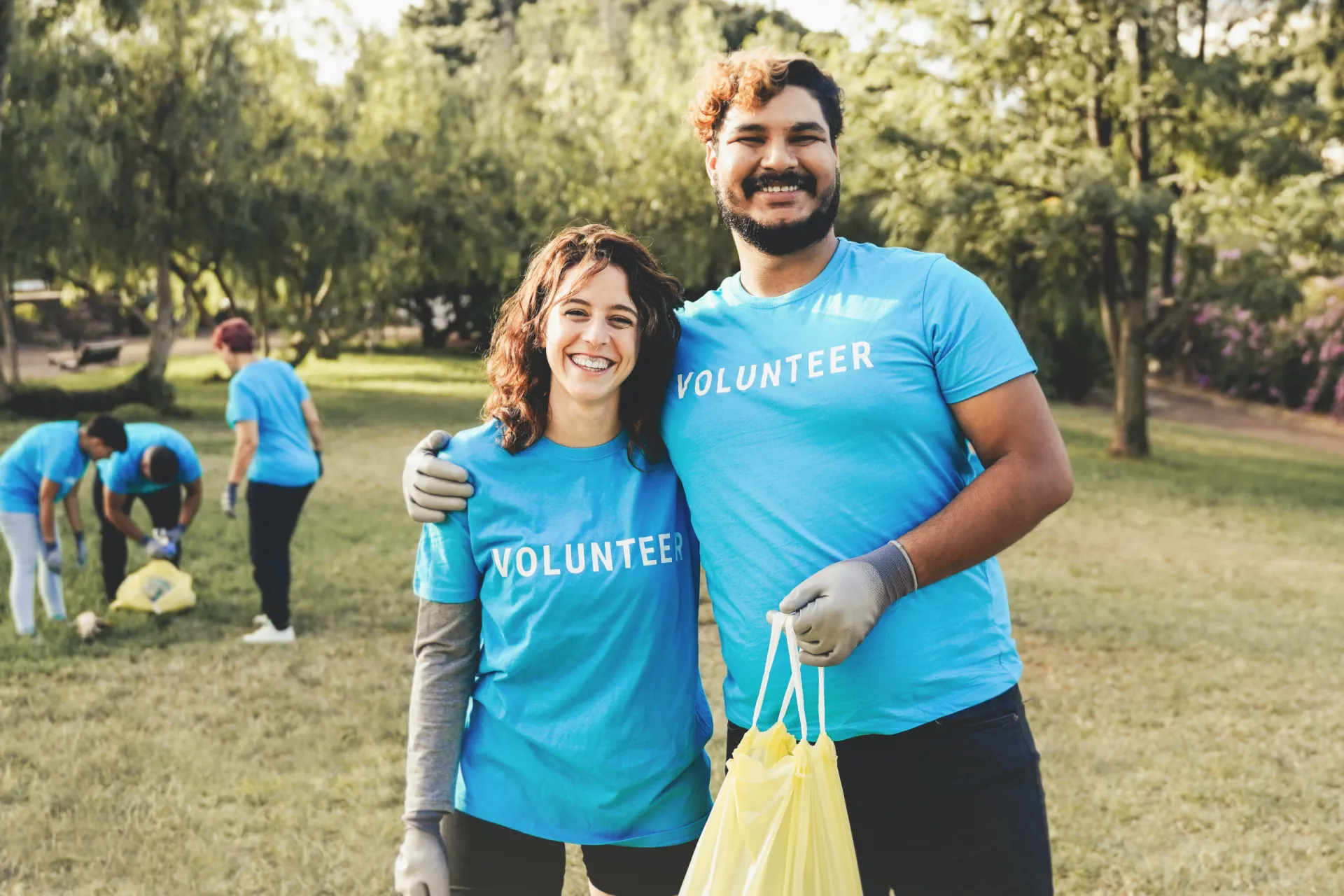
Example: a tree-planting day in which the team works together physically on an outdoor activity, with built-in cohesion dynamics (group challenges, shared goals) and a tangible environmental result at the end of the day.
Corporate volunteering
This is a programme – usually ongoing rather than one-off – through which the company enables, and often pays for, its employees’ time to help social causes, normally through charities and non-profit organisations. The primary objective is social impact; team cohesion is a by-product, not the explicit purpose.
Example: an annual programme in which employees can spend a number of hours (paid as working time) helping charities of their choice, individually or in small groups.
Charitable team building
Primary objective: team cohesion
Format: a one-off event
Corporate volunteering
Primary objective: social impact
Format: an ongoing programme
Key differences
| Charitable team building | Corporate volunteering | |
|---|---|---|
| Primary objective | Team cohesion | Social impact |
| Frequency | One-off (an event) | Ongoing (a programme) |
| Activity design | Tailor-made, with a group dynamic element | Defined by the partner charity or organisation |
| Participation | The whole team, on a specific date | Individual or in small groups, flexible |
| Measurement | Team satisfaction + tangible result of the day | Volunteering hours, number of participants, cumulative impact |
When each format makes sense
Charitable team building
It makes sense when the central objective is team-related – for example, to close a project, welcome new joiners, or hold an annual cohesion day – and you want that moment to also have a sense of purpose that goes beyond pure entertainment. It’s the right option when you’re looking for an event, not an ongoing programme.
Corporate volunteering
It makes sense when the company wants to build a sustained policy of social involvement, usually linked to its CSR strategy or its medium- to long-term company culture. It requires more organisational structure (managing hours, relationships with charities, ongoing internal communication) but creates greater cumulative impact and a perception of real, not one-off, commitment.
How to combine both in a CSR strategy
The most common approach – and the most effective – isn’t to choose between the two, but to use them at different levels of the same strategy:
Corporate volunteering
The base programme: ongoing, managed by HR, with voluntary and flexible participation.
Charitable team building
A one-off event for the whole team, which also showcases and communicates the company’s social commitment – both internally and externally.
Tree planting as a bridge between the two formats
An activity such as tree planting is a good example of this bridge: in itself it’s charitable team building (a one-off event, the whole team, a built-in cohesion dynamic), but its result – the reforested area, the number of trees planted – can be built into the communication of the company’s corporate volunteering programme as one of its actions of the year. The one-off event feeds the story of the ongoing programme.
Impact on employer branding and internal culture
Both formats contribute to employer branding, but in different ways:
A shared, memorable moment
Charitable team building: high value for immediate internal communication (photos, video, testimonials from the day) and for onboarding new joiners.
A story of ongoing commitment
Corporate volunteering: more relevant for external communication (sustainability reports, medium-term employer brand positioning) and for long-term talent retention.
A company that only runs one-off events risks having them seen as isolated “image-washing” exercises; a company that only has volunteering programmes without visible team moments misses the chance for that commitment to be experienced collectively. Combining the two solves both limitations.
Impalaya’s approach
Impalaya designs charitable team building activities – such as Tree Planting – that can work both as a one-off cohesion event and as one piece of a wider CSR strategy. If your company already has a corporate volunteering programme and is looking for a team event that ties in with that story, or if you want to take the first step towards a CSR strategy with a high-impact team event, we can help you design the activity that fits best in each case.